

Aesthetic services
Botox & Dysport
Gentle, precise injections that soften forehead lines, frown lines, and crow’s feet while keeping your natural expression. Performed by our board-certified nurse practitioner, with results that look rested and refreshed.
How Botox and Dysport work
The lines between your brows, across your forehead, and beside your eyes come from muscles that work hard every day. Botox and Dysport ease those muscles, letting the skin smooth while you keep every smile, frown, and raised eyebrow.
Our Approach
At St. Johns Wellness, every treatment is planned by our board-certified nurse practitioner and mapped to your anatomy, not a template. We treat the muscles that create the lines, leave the ones that give you your expression, and follow up at two weeks to make sure the result is exactly right.
Both Botox and Dysport are FDA-approved and well studied. Results begin to show within a few days and settle fully by about two weeks. There’s no recovery involved; most patients come in during a lunch break and go straight back to their day.
15–30 minutes
Minimal to none
Last 3–4 months
Where we treat
Every area of the face ages a little differently. We map each treatment to your features, softening the lines that bother you while keeping your expression fully intact.

Crow's feet
Fine lines fanning from the outer corners of the eyes. Treated so your eyes still crinkle, minus the creases.
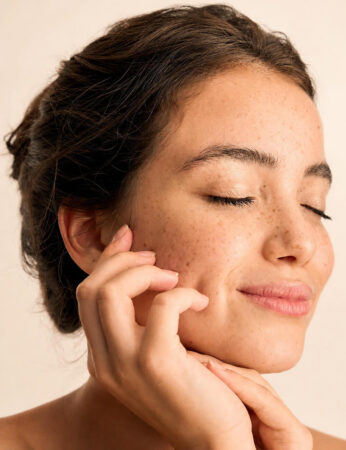
Forehead lines
Horizontal lines from raising your brows. Dosed lightly, so you keep your natural lift and expression.
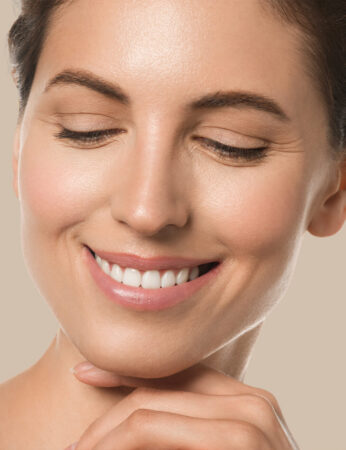
Frown lines
The "11s" between the brows. Usually the first area treated, and the one that reads most as rested.

Bunny lines
Diagonal creases across the bridge of the nose when you scrunch. Often treated together with frown lines.

Brow lift
A few precise injections above the outer brow release the muscle pulling it down, subtly opening the eyes.
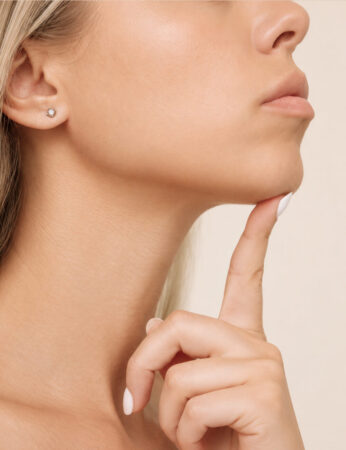
Chin dimpling
The uneven texture that shows when the chin tightens. Relaxing it smooths the surface and softens a downturned mouth.
Candidacy
Am I a good candidate for Botox or Dysport?
Botox and Dysport work best on lines caused by muscle movement, which is why they’re so effective on the upper face. You’re likely a good candidate if:
- Have lines on your forehead, between your brows, or around your eyes
- Look tired or stressed even when you feel fine
- Want to prevent new lines before they deepen
- Prefer a subtle, natural result over a dramatic change
Every visit begins with a consultation, where our nurse practitioner reviews your goals and health history and tells you plainly whether this is the right treatment for you.
What to expect
A short visit with lasting results
The visit itself takes about 15 to 30 minutes, including a short consultation. You may notice small bumps at the injection sites for around twenty minutes and, occasionally, a pinpoint bruise. Makeup can go on after four hours. Beyond that, there’s nothing to hide and nothing to recover from.
Before your visit
- Skip alcohol, aspirin, ibuprofen, and fish oil for 24–48 hours
- Arrive with clean skin, or we'll cleanse it for you
- Tell us about any illness, pregnancy, breastfeeding, or muscle conditions
First 24 hours
- Stay upright for four hours; don't rub or press the area
- No strenuous exercise, saunas, or facials that day
- Use your expressions normally; it helps the product settle
Botox at St. Johns Wellness is $XX per unit and Dysport is $XX per unit, and consultations are free. Most first-time patients treating frown lines, forehead lines and crow’s feet use 40 to 64 units of Botox, so a full upper-face treatment typically runs $XXX to $XXX. Dysport uses more units on a different scale, so the total cost for the same area is comparable. Your provider gives you an exact quote before anything is injected.
It depends on the area and how strong your muscles are, but typical ranges are 20 units for frown lines, 10 to 20 for forehead lines, 12 to 24 for crow’s feet (both sides), 4 to 10 for a brow lift, 4 to 8 for a lip flip, and 20 to 30 per side for the masseter. Dysport is dosed on a different scale, roughly 2.5 to 3 Dysport units per Botox unit, so the numbers look higher but the treatment is equivalent.
Three to four months for most people. First-time patients sometimes find it wears off closer to the three-month mark, and with regular treatment many find the interval gradually stretches as the muscles learn to stay relaxed. Very strong muscles, like the masseter, may need treatment a little more often at first.
Both are FDA-approved botulinum toxin type A and both work the same way. Dysport tends to start working a day or two sooner and spreads slightly more, which suits larger areas like the forehead. Botox stays closer to where it is placed and is more concentrated per unit, which suits precise areas like frown lines, crow’s feet, a lip flip or a brow lift. Your provider will recommend one and can keep you on the same product at every visit.
Dysport usually begins to show within two to three days and Botox within three to five. Full results settle at 10 to 14 days, which is why we schedule your follow-up check at two weeks rather than sooner.
For the first four hours, stay upright and don’t rub or press on the treated areas. For 24 hours, skip strenuous exercise, alcohol, saunas and hot yoga, all of which can increase bruising or move the product. Avoid facials, facial massage and lying face-down on a massage table for about a week. Makeup can go on after four hours, and moving your face normally is fine and even helpful.
There is no set age. Most people start between their late twenties and late thirties, when lines begin to linger after the face relaxes. Small, infrequent doses at that stage, sometimes called preventive or “baby” Botox, keep lines from etching in. If your lines only appear with expression and vanish at rest, you are a good candidate for a light preventive dose.
Yes. Botox or Dysport injected into the masseter, the large chewing muscle, relaxes it so clenching and grinding ease, usually within one to two weeks. Over two to three months many patients also notice a slimmer, softer jawline. This is an off-label use that we treat regularly at our St. Johns and St. Augustine offices; it typically requires 20 to 30 units per side and lasts four to six months.